Ronen Chamber Ensemble: A fresh look at the meaning of 'Americana'
The artistic directors of Ronen Chamber Ensemble designed a program this past weekend where they brought in a guest string quartet to nail down a program titled "Americana" firmly in masterpiece territory.
 |
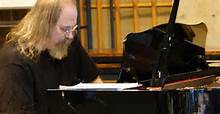
| Gregory Martin, Alastair Howlett, Jennifer Christen |
It was worth the extra travel to hear ISO concertmaster Kevin Lin head the guest musicians on the first violin part, with Ziqing Guo on second, Zhanbo Zheng, viola, and CJ Collins, cello.
Lin's leadership, showing his usual connection to the emotional heft of a score on top of technical security, was spectacular especially in the second movement, Lento. There the theme is unsurprisingly close to the black American influence observed in works from his residency in Spillville, Iowa.
In that town during a productive American sojourn the Bohemian master also produced the imperishable melody in the contemporaneous "New World" Symphony that became known by adaptation as "Goin' Home." The spirit of Spillville is alive in this work, sunny in demeanor, rising in harmonious excitement into the climax of the finale. At UIndy, it was a guaranteed "bravo" generator, earning a standing ovation in Ruth Lilly Performance Hall.
The program gave proper prominence in the first half to Ronen's artistic leadership, which includes pianist Gregory Martin in addition to Christen and Howlett. The trio played a work-in-progress suite by UIndy composer John Berners. Inspired by American writers as diverse as Mark Twain, James Baldwin, and Bob Dylan,"Rain on Hardened Earth" puts the musicians through a thick-textured obstacle course, at first with the blues form, given extra complexity by the inclusion of two dancers downstage: Julie Russel and Faith Mi Dah Fasoldt. The choreography, by Courtney Jefferies, was imaginatively suitable to the score. Gestures of relief from the "hardened earth" image were evident, along with some palms-out pushback against the challenges that the music implies.
After the dancers went offstage, there were several more movements remaining for the trio alone. Overall, the trio music, considered apart from the choreographed episodes, adhered to the composer's familiarity with jazz rhythms and phrasing. Unsurprisingly, there was more of an embedded sensitivity to American vernacular music than is evident in similar early Stravinsky pieces from the era of European composers' brief flirtation with jazz. A final episode showcased Martin in a solo drawing upon boogie-woogie.
The commissioned work, presented in its premiere, would be fun to hear again, maybe with the titles projected on a screen so that the picturesque shifts suggested by the movement titles could be appreciated.
Christen knows the creative work of another oboist, Alyssa Morris, who is also a composer on the faculty of Kansas State University. Completing the program's American theme was her "Coastal Kaleidoscope." The charming trio draws upon the composer's memories of a trip to Monterey, California.
Water imagery is realized musically (as many composers have done) in the outer movements. In the middle is "Seals," depicting those sea mammals at their most playful. Morris' seals seem to have the blues, a form to which Morris has applied her signature in this movement, but they are thoroughly at home on the upbeat side of the genre. The whole piece carried out a design to emphasize the compatibility of three instruments that don't get much opportunity to be exclusive chamber-music partners. The performance on Monday evening delightfully displayed the splendor of this combination.


Comments
Post a Comment