Stylish, spirited tour of Europe: Ensemble Caprice returns to Early Music Festival
Under Matthias Maute's genial guidance, the festival mood is bound to be uppermost anytime that Ensemble Caprice graces the schedule of the Indianapolis Early Music Festival. Thus it was especially footloose and fancy-free Sunday afternoon as it mounted "Baroque Summits," starting and ending with Antonio Vivaldi in sunny Italy.
 |
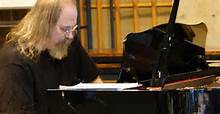
| Janelle Lucyk lent vocal brilliance to the concert. |
Like Ensemble Caprice, Lucyk is Canadian, and is artistic diretor of an early-music group based in Montreal called Menestrel. Her performance here certainly confirmed not only her artistic obligation to the works she performed, but gave evidence of her breadth of knowledge and compatibility with the ensemble's style. The semi-staged performance of a Handel aria displayed her ease with movement that heightened the music's emotional appeal.
Ensemble Caprice consisted of, besides founder Maute (recorder and flute) and longtime member David Jacques (baroque guitar), baroque violinists Eleanor Legault and Grant Johnson and, from Indiana University, baroque cellist Joanna Blendulf. Jacques got to exhibit with aplomb a variety of textures and mood in a solo set embracing dance and song, which opened the cross-border program section highlighting France and Spain.
Maute joined the ensemble violinists for Purcell's Three Parts Upon a Ground, which introduced Handel's "Lascia chio pianga." The tangy dissonance in the final cadence of the Purcell foreshadowed the aria of lamentation — an example of Maute's programming acumen. For the most part as a performer, Maute stuck to his specialty of flute and recorder, starting with a Vivaldi concerto as program-opener and later incorporating his own birdsong-inspired "Concerto il colibri," where his stunning virtuosity — controlled, accurate, and fleet — was foremost. The German-born Canadian musician was of course right at home in the German section of the program, titled "International, on purpose."
A program with such a variety of short pieces offered the opportunity to play a true encore ("again") with the chaconne upon "Sans frayeur dans ce bois" by the Frenchman Marc-Antoine Charpentier. The original includes two lines that, in translation, provide timely advice for surviving in uncertain times like both the High Baroque and our own: "I do not seek danger, but at least I would like to fear it."


Comments
Post a Comment