Music director's outstanding February run ends with 'Scotch snap'
George Bernard Shaw, one of a small handful of readable music critics of stature, once called Mendelssohn's Symphony no. 3 in A minor "a work which would be great if it were not so confoundedly genteel." A champion of blood-and-thunder Verdi and the spiritually titanic Wagner, Shaw maybe made such an assessment on the basis of undernourished performances he'd heard of the work nicknamed "Scottish" or "Scotch."
The latter word is no longer applied respectably to anything much besides the venerated distilled whiskey from Scotland. In an essay on the composition, the beverage's distinctive flavor encouraged Michael Steinberg, one of the commentators on the "Scottish" symphony, to describe the dark coloration of its first movement as "peaty."
 |
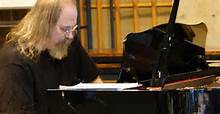
| James Ehnes always makes a strong impression here. |
Water over the region's peat beds lends the beverage its character — and by extension the kind of orchestration with which the "Scottish" gets under way. Avoiding Scottish folk music though he does, Mendelssohn often uses in this movement the rhythmic figure known as "the Scotch snap," two accented notes in succession, the first one short, the second heavy.
The Scottish theme of this weekend's program (the second performance is at 5:30 this afternoon) culminates music director Jun Märkl's three-week display of his splendid New Year's greeting to the Indianapolis Symphony Orchestra's patrons.
As for the "Scottish," Friday's performance wisely and zestfully steered clear of the gentility that easily attached itself to the Shaw-scorned English oratorios inspired by Mendelssohn's great examples. As R. Larry Todd rightly notes in his 2003 biography of the composer, "the idea of Mendelssohn as a superficial, effeminate Victorian cannot stand."
For instance, the vigorous passing around of tunes in that first movement is not superficial. The surges of energy toward its climax bring to mind the phrase that provided the title of a contemporary work the ISO played last week, "Ebbs and Flows" by Ke-Chia Chen.
Mendelssohn's attention to detail is exemplary and never threatens to blur his focus. He was the most controlled romantic composer, perhaps. Some of the small stuff is thrilling; in the finale, the cellos' brief ascending chromatic line is goose-bump city. The more conspicuous touches of inspiration, such as the crowning horn chorale in that movement, have a glory all their own that nowhere borders on the genteel.
Märkl had the orchestra fully committed to delineating both the specifics and the generalities of the score. The performance reflected the composer's perhaps surprising objection to a common puzzle about music's meaning: "What the music I love expresses to me are not thoughts too indefinite for words, but rather too definite."
The program's first half opened with a colorful, almost offhand treatment of a Scottish tune suggested to Claude Debussy."Scottish March on a Popular Theme" had the French composer's distinctive idiom expressed in a version he had originally confined to piano duet. It was great to hear for the first time the orchestral version, by no means dismissively tossed off but aptly illustrative of the Scottish spirit in miniature from across the Channel.
For the tunes of Scotland played in full measure and combined in memorable ways, the program features Max Bruch's Scottish Fantasy. Less a solo concerto than a blend of catchy tunes scored for violin and orchestra in full rapport, the interpretation in these concerts is fused to the conductor's setting aside the score in order to be in sympathy with the playing of James Ehnes. Friday's performance showed conductor and soloist to be fully in sync in matters of tempo and dynamics.
Several times in the past decade, Ehnes has been an ISO guest artist, always satisfactory and in many respects outstanding. His well-balanced phrasing and sterling tone on Friday illuminated Bruch's setting of the source material, as well as being apt for every bravura passage and application of filigree. Also remarkable here was the positioning of the harp front and center, played by principal harpist Claire Thai in such fine partnership with the violinist that Ehnes, with Märkl's support, beckoned her to the front for a solo bow at the end.
The Canadian violinist then responded to the warm ovation with two encores, both from J.S. Bach's third solo violin sonata in C major. The finale, as Ehnes noted, happened to show an affinity with the spirit of Scottish folk music the way he played it. And certainly, the guest artist's harking back to Bach also was a reminder of Mendelssohn's high regard for tradition and his role in reviving some of his predecessor's loftiest works. Being "confoundedly genteel" turns out to have little to do with it.


Comments
Post a Comment