Israeli Chamber Project puts its own stamp on 'Eroica' Symphony
 |
| Antje Weithaas is ensemble guest on this tour. |
After lighter music of great polish and right to the point of coordinated virtuosity occupied the first half, the visiting Israeli Chamber Project, including a guest violinist from Germany, Antje Weithaas, moved into high seriousness with the advantage of familiarity after intermission. Ensemble Music Society presented the seven visiting musicians in an arrangement of Beethoven's Symphony No. 3, op. 55 ("Eroica") at the Indiana History Center Wednesday night.
Many in the audience had recently experienced the Indianapolis Symphony Orchestra's performance of the original work under music director Jun Märkl's inspired direction. The appropriately well-designed arrangement by Yuval Shapiro was superbly played by the visitors. Simply the repeat of the exposition in the first movement held additional interest that the full-orchestra account wouldn't necessarily provide.
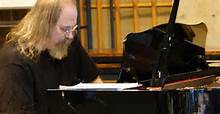
There were details brought out by the reduced forces that fortunately were never distorted by emphasis on different voices that might have unbalanced the score: anticipating the unique spotlight on three horns in the Trio version of the Scherzo had me braced for something slightly bizarre, but indeed some consistency in timbre was assured by having the piano (Assaf Weisman) suavely handle the internally bonded contrast with the main material. Also revealing was how clearly the counterpoint near the climax of the finale stood out with the instrumental onslaught reduced, but still vigorously presented.
In the first half, there were opportunities to admire further concentration on the project's members in works designed for the combinations the composers intended. Clarinetist Tibi Cziger gave a distinguished account with string quartet of Bernard Herrmann's "Souvenir de Voyage" to open the program. Balances were well-sustained and tempo adjustments were unanimous across three nostalgic movements. The score's picturesque quality presented an immediate reminder of Herrmann's distinction as a film composer.
A work by Erwin Schulhoff, a Prague-born Jewish composer of major talent who succumbed to the Holocaust atrocity, gave flutist Guy Eshed and pianist Weisman a chance to shine. The witty four-movement Sonata for Flute and Piano was compact and buoyant throughout, with especially droll endings to the second and fourth movements.
But the principal memory lodged by this concert may well be hearing a refreshing version of one of the milestones of the symphonic repertoire stated by seven expert players.


Comments
Post a Comment